
Thin Skin Hair Systems: Thickness, Fit and Hairline Options
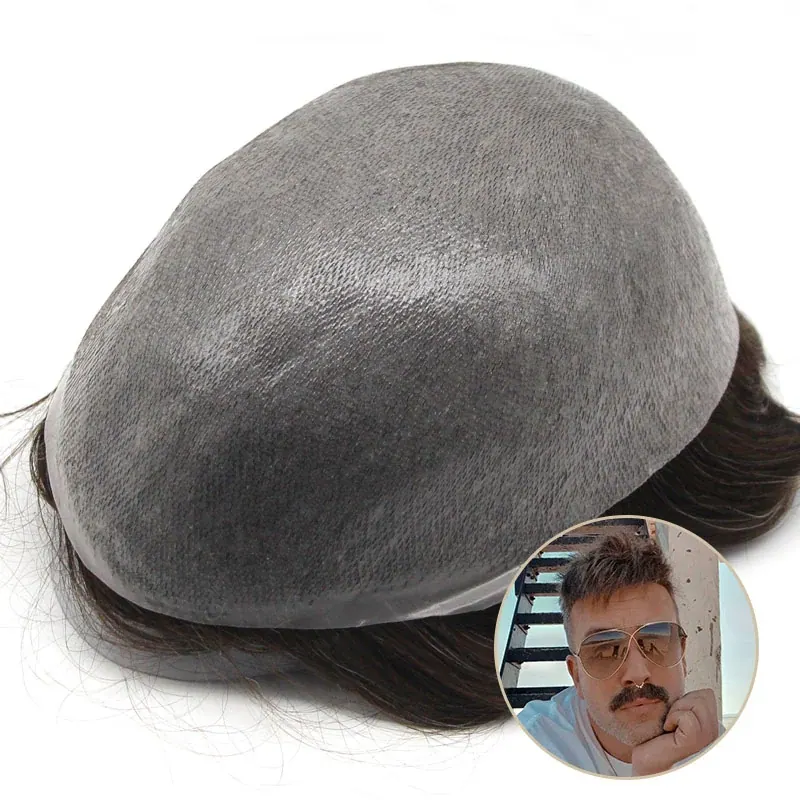
A thin skin hair system uses a polyurethane base. Product listings describe it with terms such as skin, poly or PU, and often provide a thickness in millimetres. That measurement is useful, but it is only one part of the
This product overview is based on documented specifications. It is not a claim of independent hands-on testing.
A thin skin hair system uses a polyurethane base. Product listings describe it with terms such as skin, poly or PU, and often provide a thickness in millimetres. That measurement is useful, but it is only one part of the specification. The method of securing the hair, the base dimensions, density and front contour also matter.
Read the thickness carefully
The captured product range includes several stated thicknesses and ranges. A listing that says 0.06 mm should not be treated as identical to one that says 0.04–0.06 mm. Check whether the measurement applies to the whole base or a particular section, especially when the product combines materials.
Source guidance presents very thin bases as an option for a low-profile appearance and thicker skin constructions as a different handling trade-off. This does not establish a guaranteed lifespan for either one. Ask for the care requirements and any product-specific wear estimate, including the conditions attached to it.
Compare how the hair is secured
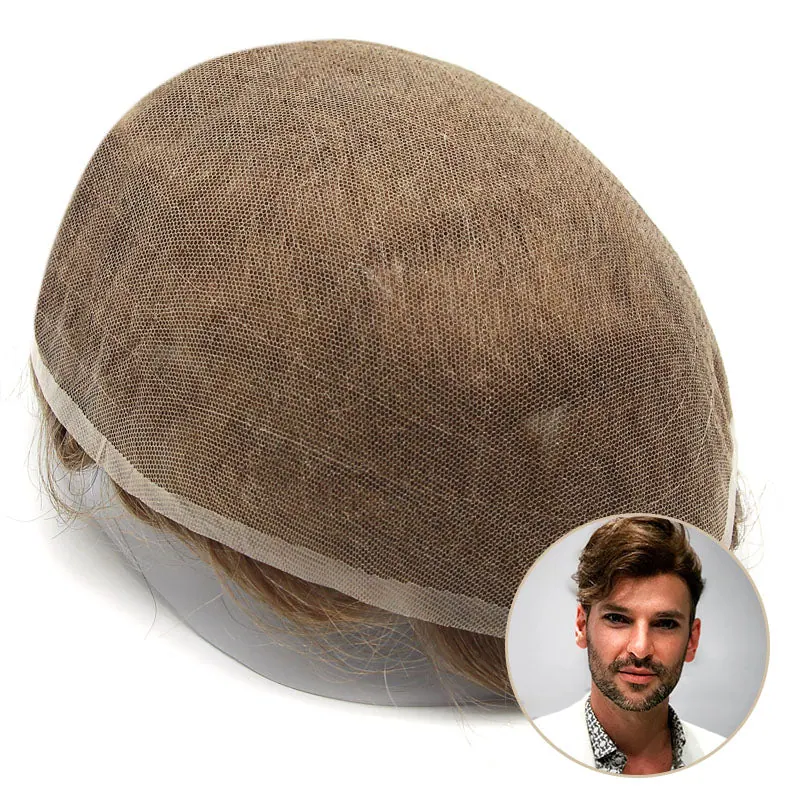
Thin skin listings can describe V-looped, injected or knotted hair. Keep that detail in your comparison instead of reducing every product to its thickness. If the front hairline is a priority, ask for a close photograph of the front and an explanation of the construction used there. The same material name can cover different designs.
Check the fit before the colour
Common stock dimensions in the captured range include 6 × 8, 7 × 9 and 8 × 10 inches. These are catalogue options, not a recommendation for every wearer. Compare the measured coverage area with the exact product dimensions and confirm whether the base can be trimmed to the required shape. A larger stock size does not by itself confirm that every edge or section can be cut away.
Once the base is suitable, review colour, grey percentage, density, hair length and curl. Colour photographs can vary with lighting and screens, so clarify the available colour code or sample method. Match the planned haircut to the supplied hair length and leave the final cut-in to the agreed fitting process.
Plan attachment and care as one routine
- Confirm the intended tape or adhesive and its compatibility with the chosen base.
- Follow the attachment product’s instructions for application, removal and skin contact.
- Use the hair system’s care guidance when choosing cleansing and styling products.
- Handle the base gently and support it during removal and cleaning.
- Check the product-specific heat guidance before using drying or styling tools.
What to include in a quote request
Send the base size, required thickness or construction, hair colour, grey percentage, density, length and curl pattern. Mention whether you need a stock unit or a confirmed custom configuration. A complete specification makes prices easier to compare and reduces the chance that two quotations cover different products.
Questions & discussion
No published comments yet. Be the first to ask a question.
Sign in to join the discussion.