
Hair System Density: Choose a Natural-Looking Match
Hair density describes how full a hair system is intended to appear. It is commonly expressed with a percentage or a word such as light, medium or heavy. These descriptions help communicate an order, but the source guida

Hair density describes how full a hair system is intended to appear. It is commonly expressed with a percentage or a word such as light, medium or heavy. These descriptions help communicate an order, but the source guidance makes an important distinction: density scales are not necessarily identical between suppliers or products.
Use the surrounding hair as a reference
For a partial hair system, compare the planned top with the hair at the sides and back. A large difference in apparent fullness can make blending more difficult. Consider the haircut, hair length, curl and styling direction at the same time, because each affects how much hair appears to be present.
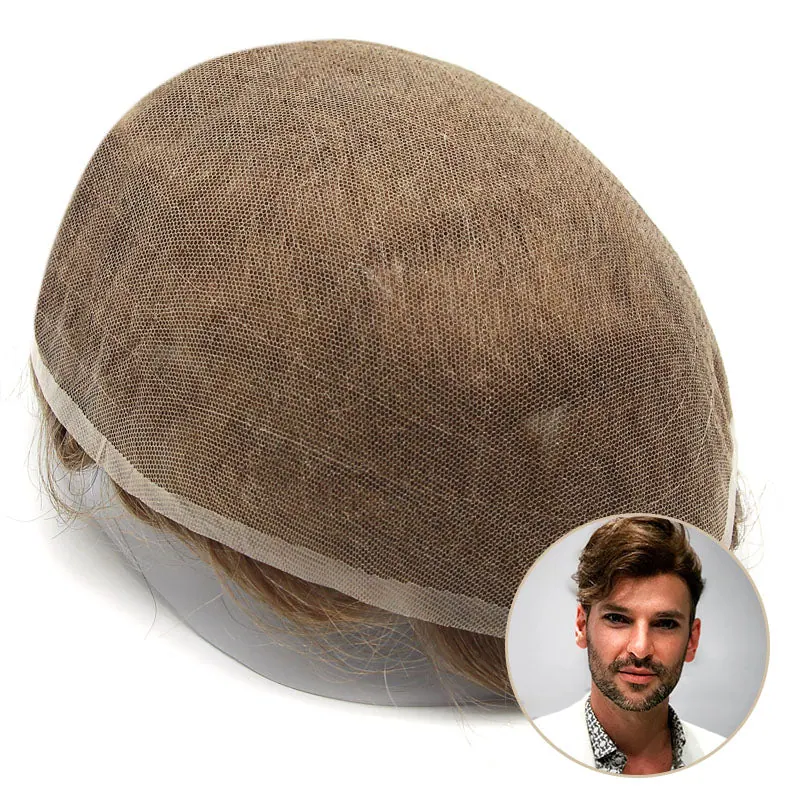
A full-cap system has a different coverage pattern, so it should be considered as a complete style rather than only as a top section. In either case, a clear description and suitable reference photographs are more useful than selecting the highest available density without considering the look you want.
Percentages are a communication aid
The captured catalogues use several density labels and percentages. Treat the number as part of that particular product’s specification. A percentage does not provide a universal conversion to an exact number of hairs per square centimetre, and a verbal label from one range should not automatically be carried over to another.
When comparing products, ask for the offered density scale and images of the relevant option. Keep the hair length and curl similar in the comparison where possible. A curled or longer style can appear different from a shorter, straighter style even when the listed density labels match.
Consider the base and hairline together
The base construction and front design can affect how the hair is presented. Explain whether the front hairline will be exposed, brushed back or covered by a fringe. Ask for a compatible combination of base, front treatment and density rather than treating density as an isolated upgrade.
Plan the density before the final haircut
The source guidance distinguishes blending and styling from changing the overall density of a finished unit. Removing hair afterwards is not always a simple way to reproduce a lower-density construction. Discuss a substantial density change before ordering and use the cut-in process to achieve the agreed shape and blend.
- Describe the fullness of the surrounding hair and the desired hairstyle.
- Confirm the density scale used for the selected product.
- Check whether the front and other zones have the same density.
- Confirm which density choices are available in stock and which require a custom specification.
- Keep a record of the final specification for future comparison and repeat enquiries.
Make the request specific
A useful enquiry combines density with base size, colour, grey percentage, hair length and curl. If you already wear a system, identify what you want to keep and what you want to change. These details help make the next quotation and specification easier to assess.
Questions & discussion
No published comments yet. Be the first to ask a question.
Sign in to join the discussion.